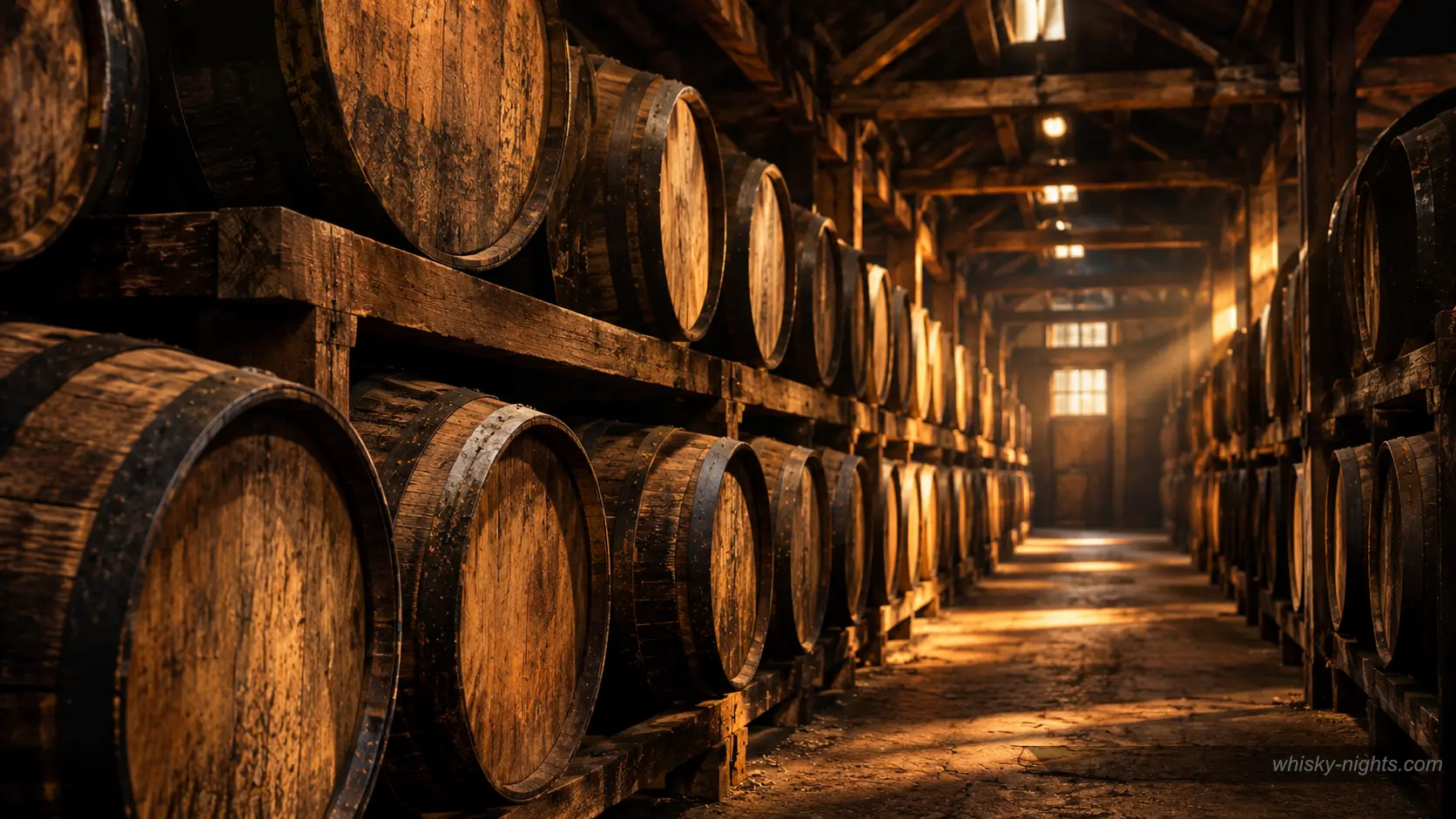
One of the most important influences on a whisky’s aroma and flavour is the cask in which it matures. Even whiskies produced at the same distillery can develop very different characteristics depending on the type of cask used and what it previously held.
Bourbon casks often contribute notes of vanilla and caramel, while sherry casks are associated with dried fruit, nuts and spice. Mizunara oak, native to Japan, is also prized for the distinctive aromas it can impart to whisky.
Cask type alone, however, does not determine a whisky’s flavour. The character of the spirit, maturation period, cask history and warehouse conditions all contribute to the final result.
This guide explores the different types of oak used for whisky maturation, how cask practices vary between whisky-producing countries, and the characteristics of sherry casks, Mizunara oak and other maturation techniques. Understanding these factors can help you interpret bottle descriptions and find whiskies that suit your taste.
1. How Casks Shape Whisky’s Flavour
Newly distilled spirit already has aromas and flavours derived from its raw materials, fermentation and distillation. Maturation develops this character, introducing additional flavours and bringing the spirit’s various elements into balance.
Flavours Contributed by the Cask
Oak contains a range of compounds that interact with maturing whisky. Depending on the wood and how it has been treated, these compounds can contribute notes of vanilla, spice, wood and coconut. The heating of the cask’s interior and its previous contents also influence the resulting flavour.
Bourbon-cask-matured whisky commonly displays notes of vanilla, caramel and sweet spice. Sherry-cask-matured whisky, by contrast, is often associated with dried fruit such as raisins and plums, alongside nuts and spice.
These are typical flavour profiles rather than fixed rules. Not every bourbon-cask-matured whisky tastes the same, and sherry casks do not invariably produce a rich, sweet style.
Interaction with the Wood and the Maturation Environment
Maturation involves more than the transfer of compounds from the wood into the spirit. Chemical changes take place within the whisky itself, while its various aromas and flavours gradually develop and integrate. The condition of the cask’s interior, the properties of the wood and changes in temperature all influence this process.
Some alcohol and water evaporate during maturation. This loss is commonly known as the angel’s share. The rate of evaporation and the resulting changes in alcoholic strength depend on factors such as temperature, humidity and warehouse conditions.
Consequently, whiskies matured in the same type of cask can develop different flavour profiles when their maturation environments differ. Nor does longer maturation automatically mean better quality: the outcome depends on how the spirit, cask and environment interact over time.
2. Types of Oak Used for Whisky Casks
Oak is the principal wood used for whisky casks. Its strength and durability make it well suited to maturation, but different species of oak have different properties. The type of wood and the way it is treated both influence the whisky’s eventual character.
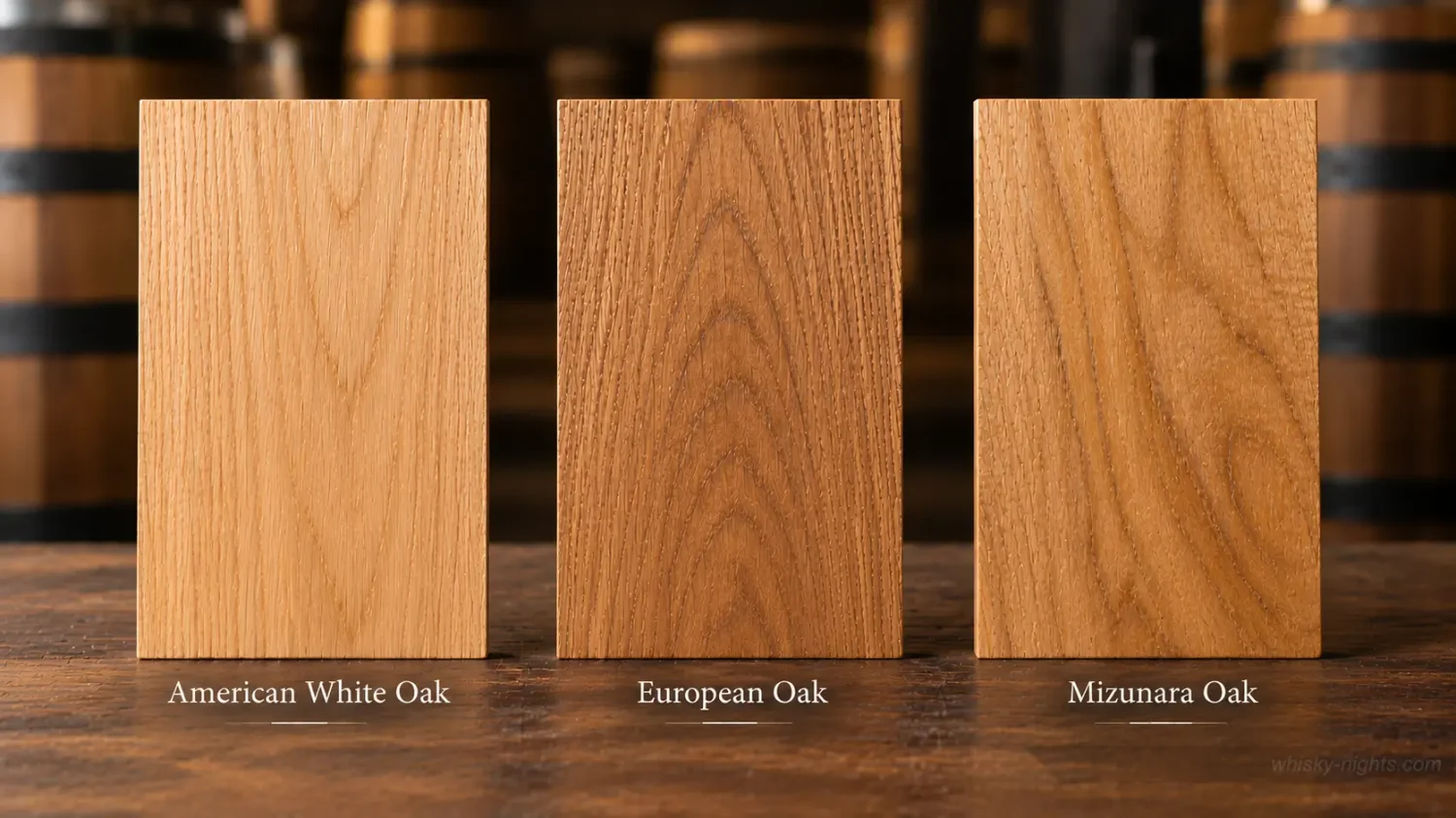
American White Oak
American white oak is widely used for whisky maturation around the world, particularly for bourbon casks. It is associated with notes of vanilla, caramel and coconut.
Bourbon must be matured in new charred oak containers. Once emptied, these casks become an important source of maturation casks for other whisky-producing countries, including Scotland, Ireland and Japan.
European Oak
European oak is well known for its use in sherry casks. It is often associated with flavours of spice, dried fruit and nuts.
The term European oak, however, does not refer to a single, uniform type of wood. Characteristics vary according to the oak species, its origin, how the wood is treated and the cask’s previous use. The flavour of a sherry-cask-matured whisky also reflects the cask’s sherry history and preparation, not simply the type of oak.
Mizunara: Japanese Oak
Mizunara is an oak species native to Japan and is particularly noteworthy in the world of Japanese whisky. It can contribute distinctive aromas reminiscent of fragrant woods such as sandalwood and agarwood, alongside spicy nuances.
Mizunara is also challenging to work with as a cask-making material. Its properties can make constructing sound, liquid-tight casks difficult, creating additional demands on sourcing and craftsmanship. The extent to which its characteristic aromas develop depends on the condition of the cask and the maturation conditions.
Mizunara is an important part of the story of Japanese whisky, but not all Japanese whisky is matured in Mizunara casks.
Charring and Toasting
Alongside the type of oak, the way the inside of a cask is heated influences the flavour of the maturing whisky.
Charring involves exposing the inside of a cask to intense heat or flame, carbonising the surface. It is particularly important in bourbon production and changes the wood’s composition and its interaction with the spirit during maturation.
Toasting involves heating the wood to develop and transform its flavour compounds without aiming to create the same deeply carbonised surface as charring. The precise treatment varies according to the cask’s intended use and the cooper’s methods.
Even when the same type of oak is used, differences in heating technique and intensity can lead to different maturation results.
3. How Cask Practices Differ Between Whisky-Producing Countries
Cask practices vary between countries according to legislation, tradition, the availability of casks and the style each producer wants to achieve. The following sections outline the main approaches in five major whisky-producing countries.
United States: Bourbon Whiskey
A defining feature of bourbon is the requirement to mature it in new charred oak containers. Unlike whisky matured in previously used casks, bourbon draws its maturation character from fresh oak, often developing notes of vanilla, caramel and sweet spice.
After the bourbon has been removed, the casks are widely reused by producers of Scotch, Irish, Canadian and Japanese whisky, among others. This established trade in used casks is one reason bourbon barrels are so common throughout the global whisky industry.
These requirements apply to bourbon, not to every style of American whiskey. Other American whiskey categories can follow different production and maturation rules.
Scotland: Scotch Whisky
Scotch whisky is matured in a variety of oak casks, including bourbon and sherry casks. Producers also use wine casks and other eligible casks to introduce additional layers of flavour, sometimes through a finishing period.
Cask selection is important not only in shaping the character of single malts but also in designing the flavour of blended whiskies. Some casks are chosen to contribute pronounced wood-derived flavours, while others are selected for their more restrained influence, allowing the character of the spirit to remain prominent.
Scotch whisky offers considerable variety in cask maturation, but its production is governed by legal requirements. Not every type of cask can be used without restriction.
Ireland: Irish Whiskey
Irish whiskey producers also make extensive use of bourbon and sherry casks. Some expressions undergo additional maturation in casks that previously held port, rum or other drinks.
Irish whiskey encompasses several categories, including malt whiskey, pot still whiskey, grain whiskey and blended whiskey. Their production methods and spirit characteristics vary, so the flavour of Irish whiskey cannot be explained by cask type alone.
Casks remain an important tool for developing the spirit’s character, adding new flavours and bringing different elements into balance.
Canada: Canadian Whisky
Canadian whisky producers use a variety of casks and cask histories to create a broad range of styles. Both new and previously used casks feature in the industry, alongside choices of grain and blending techniques that help shape the final flavour.
Rye and other grain-derived characteristics can play an important role in Canadian whisky, making the relationship between the spirit and its cask particularly significant. However, ingredients and maturation practices differ between products, so Canadian whisky cannot be reduced to a single flavour profile.
Japan: Japanese Whisky
Japanese whisky producers use a wide range of casks, including bourbon and sherry casks. Mizunara oak also has a distinctive place in the country’s whisky-making tradition.
Japanese distilleries select casks according to the character of their spirits and the flavour profile they want to achieve. They may also combine whiskies matured in different casks to create a balanced or distinctive final expression. Mizunara is a notable part of this approach, but it is only one of many cask options.
Japanese whisky is made using a variety of casks sourced both domestically and internationally. It is important to distinguish the standards governing the use of the designation Japanese whisky from the actual maturation practices employed by individual producers.
4. First-Fill, Refill and Cask History
A cask’s influence on whisky depends not only on the type of oak and its previous contents, but also on how many times it has been used to mature spirits.
First-Fill Casks
A first-fill cask is a cask being used for the first time to mature Scotch whisky after holding another spirit, most commonly bourbon or sherry. These casks generally contribute more flavour from the wood and its previous contents than casks that have already matured whisky.
First-fill bourbon casks commonly contribute vanilla, caramel and coconut notes, while first-fill sherry casks are often associated with dried fruit, nuts and spice. The exact character depends on the oak, the cask’s previous use and the conditions of maturation.
Refill Casks
A refill cask has already been used to mature Scotch whisky at least once. Because some of the readily extractable compounds have been drawn out during previous maturation, a refill cask generally has a more restrained influence on the spirit.
This allows the character of the distillate to remain more prominent, while still developing through interaction with the wood over time. Refill casks are particularly useful when a distillery wants to mature whisky without allowing strong oak or cask-derived flavours to dominate.
The terms first-fill and refill describe a cask’s history in Scotch whisky maturation, rather than simply the number of times it has held any kind of spirit. A cask that previously matured bourbon or sherry can be first-fill for Scotch whisky, even though it is not a new cask.
Cask history is therefore an important part of understanding a whisky’s flavour. Two whiskies matured in the same type of cask can develop very different profiles depending on whether the casks were first-fill or refill, how they were prepared and how they had been used previously.
5. Cask Sizes and Their Influence on Maturation
Cask size affects the relationship between the whisky and the wood. Smaller casks generally have a greater wood-contact surface area relative to the volume of liquid they hold, which can increase the rate at which wood-derived compounds are extracted.
However, a smaller cask does not automatically produce better whisky or guarantee faster maturation. The result also depends on the oak, the cask’s previous use, the spirit’s strength, the warehouse environment and the length of maturation.
Common Whisky Cask Sizes
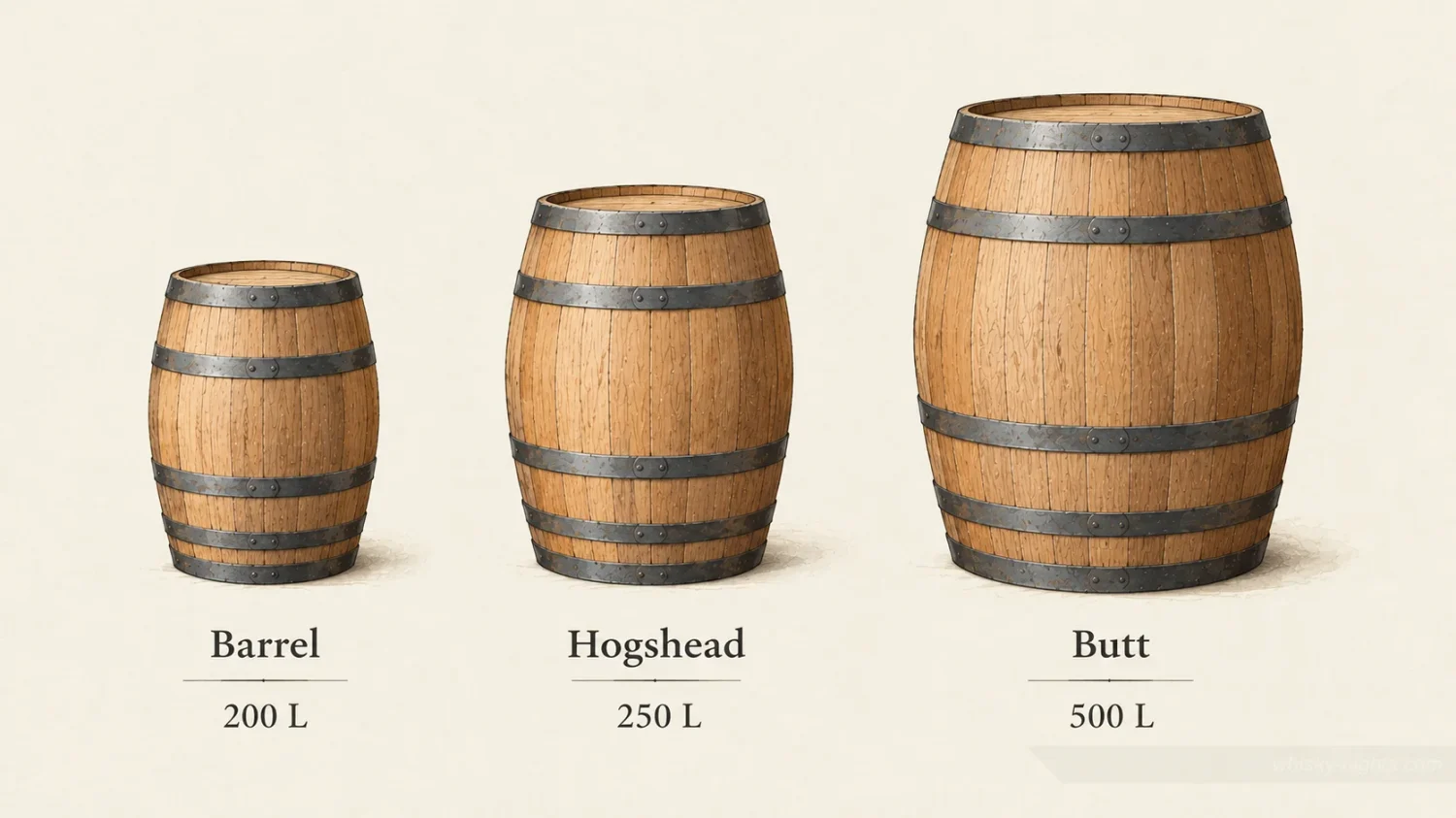
| Cask Type | Approximate Capacity | Typical Use |
|---|---|---|
| Barrel | 200 litres | Commonly associated with American whiskey and widely used for Scotch whisky maturation |
| Hogshead | 225–250 litres | Common in Scotch whisky production, often constructed using staves from standard American whiskey barrels |
| Butt | 500 litres | Traditionally associated with sherry casks and widely used for Scotch whisky maturation |
| Puncheon | 450–500 litres | Used for whisky maturation, with capacity and proportions varying by design |
| Quarter Cask | Around 50–125 litres | A smaller cask format intended to increase the wood-contact surface area relative to the liquid volume |
| Barrique | Around 225 litres | A wine cask format also used for some whisky maturation and finishing |
| Drum | Around 500 litres | A large cask format used in some maturation traditions |
| Gorda | Around 600–700 litres | A large cask format traditionally associated with sherry and sometimes used in whisky maturation |
These capacities are approximate. Actual dimensions and volumes vary according to the producer, region and intended use. In particular, terms such as quarter cask, puncheon and drum do not always refer to one standard capacity.
Cask size is only one part of the maturation process. A smaller cask can encourage more rapid extraction of oak compounds, but excessive wood influence can also develop. Larger casks have a lower wood-contact surface area relative to their volume, but they can still produce complex, well-matured whisky over time.
The choice of cask size is therefore a matter of balancing wood influence, spirit character and maturation time, rather than simply choosing the smallest available cask.
6. What Is a Sherry Cask? Sherry Styles and Their Influence on Whisky
Sherry casks are among the most familiar cask types in Scotch whisky production. Sherry is a fortified wine produced in the Jerez region of southern Spain, and casks associated with its production have long been used to mature Scotch whisky.
The term sherry cask, however, does not always mean a cask that previously held sherry for many years as part of the wine’s normal ageing process. In the whisky industry, casks are also prepared and seasoned with sherry specifically for subsequent whisky maturation. The oak, seasoning process, type of sherry and length of seasoning all influence the result.
Different sherry styles have distinct characteristics, although the flavour of the finished whisky also depends on the cask and the spirit being matured.
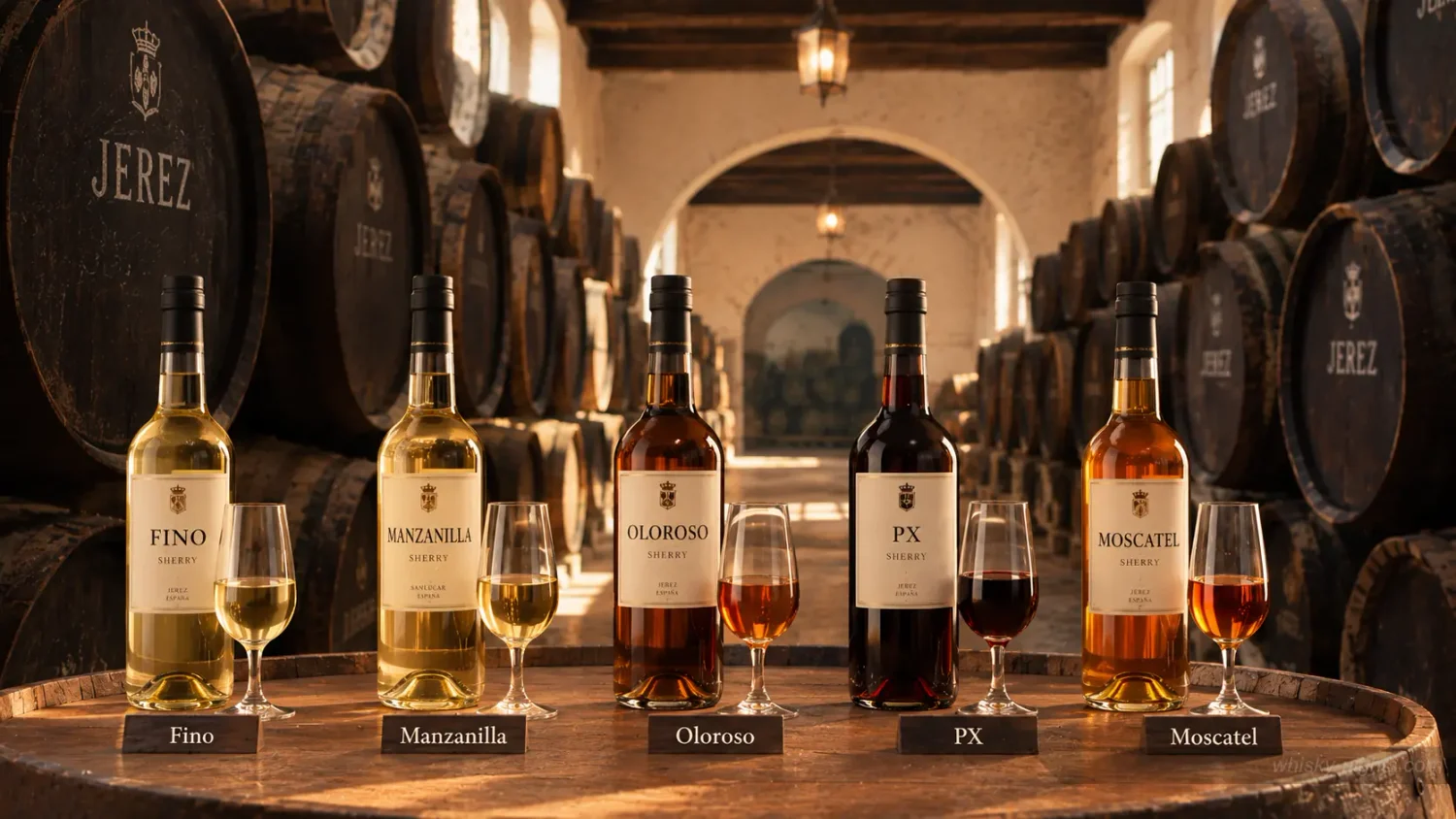
Fino
Fino is a dry, light-bodied style of sherry aged under a layer of yeast known as flor. Its profile is typically delicate and savoury, with notes associated with almonds, fresh dough and salinity. Whisky matured in casks seasoned with Fino can develop a more restrained, dry character, although the effect varies with the cask and maturation conditions.
Manzanilla
Manzanilla is a dry sherry produced in Sanlúcar de Barrameda and also aged under flor. It often has a fresh, saline character with delicate almond notes. Casks seasoned with Manzanilla can contribute a subtle, dry influence to whisky.
Oloroso
Oloroso is generally richer and more oxidative in style, with nutty, dried-fruit and spice characteristics. Sherry-seasoned casks associated with Oloroso are widely used in Scotch whisky and are often linked with flavours of walnuts, raisins, dark fruit and warming spice.
Pedro Ximénez (PX)
Pedro Ximénez sherry is known for its concentrated sweetness and flavours of raisins, dates, figs and treacle. Whisky matured in PX-seasoned casks often develops a rich, sweet profile, with dark-fruit and syrupy notes.
Moscatel
Moscatel sherry is made from Muscat grapes and is known for its aromatic character, often featuring floral, citrus and sweet-fruit notes. Its influence on whisky depends on how the cask was prepared and used, but it can bring a different aromatic dimension from the richer styles commonly associated with Oloroso and PX.
Sherry-cask maturation is not a single, uniform style. A whisky matured in an Oloroso-seasoned cask can taste very different from one matured in a PX-seasoned cask, and two casks seasoned with the same type of sherry can still produce different results. When choosing a whisky, it is useful to consider the stated sherry style alongside the age, distillery character and overall maturation details.
7. Wine, Rum and Other Casks
Although bourbon and sherry casks are widely used in Scotch whisky maturation, distilleries also experiment with casks that previously held other drinks. These casks can introduce different flavour characteristics and create additional layers of complexity.
Wine Casks
Wine casks include those that previously held red or white wine, as well as fortified and sweet wines. Their influence depends on the grape variety, wine style, oak, previous use and the way the cask is prepared.
Red-wine casks can contribute notes associated with red fruit, berries and tannins, while white-wine casks may bring fresh-fruit or citrus characteristics. These are broad tendencies rather than guarantees: the finished whisky’s character depends on the full maturation process.
Other wine-related casks include those associated with Port, Madeira, Marsala and Sauternes. Port casks are often linked with dark fruit and sweetness; Madeira casks can contribute dried fruit and nutty notes; and Sauternes casks are commonly associated with honeyed, sweet-fruit characteristics. The result varies considerably with the individual cask and the whisky placed in it.
Rum Casks
Rum casks can add a different set of flavours, often associated with tropical fruit, brown sugar, molasses and spice. Their influence depends on the style of rum previously held, as well as the cask’s oak and history.
A rum-cask finish can therefore bring a sweeter, fruit-led dimension to a whisky, although not every rum cask produces the same profile.
Cognac, Beer and Other Casks
Casks that previously held Cognac, beer, tequila and other drinks are also used in some whisky maturation and finishing programmes. Depending on the cask, they can contribute fruit, malt, spice or other distinctive characteristics.
These casks are often used to create a particular flavour profile or to offer a different interpretation of a distillery’s spirit. Their influence should not be judged by the previous drink alone: the cask’s construction, oak, seasoning, previous use and the length of whisky maturation all matter.
When exploring whiskies matured in less conventional casks, it is worth looking beyond the cask label. The type of cask provides a useful clue, but it does not tell the whole story of the finished whisky.
8. Japanese Whisky and Mizunara Casks
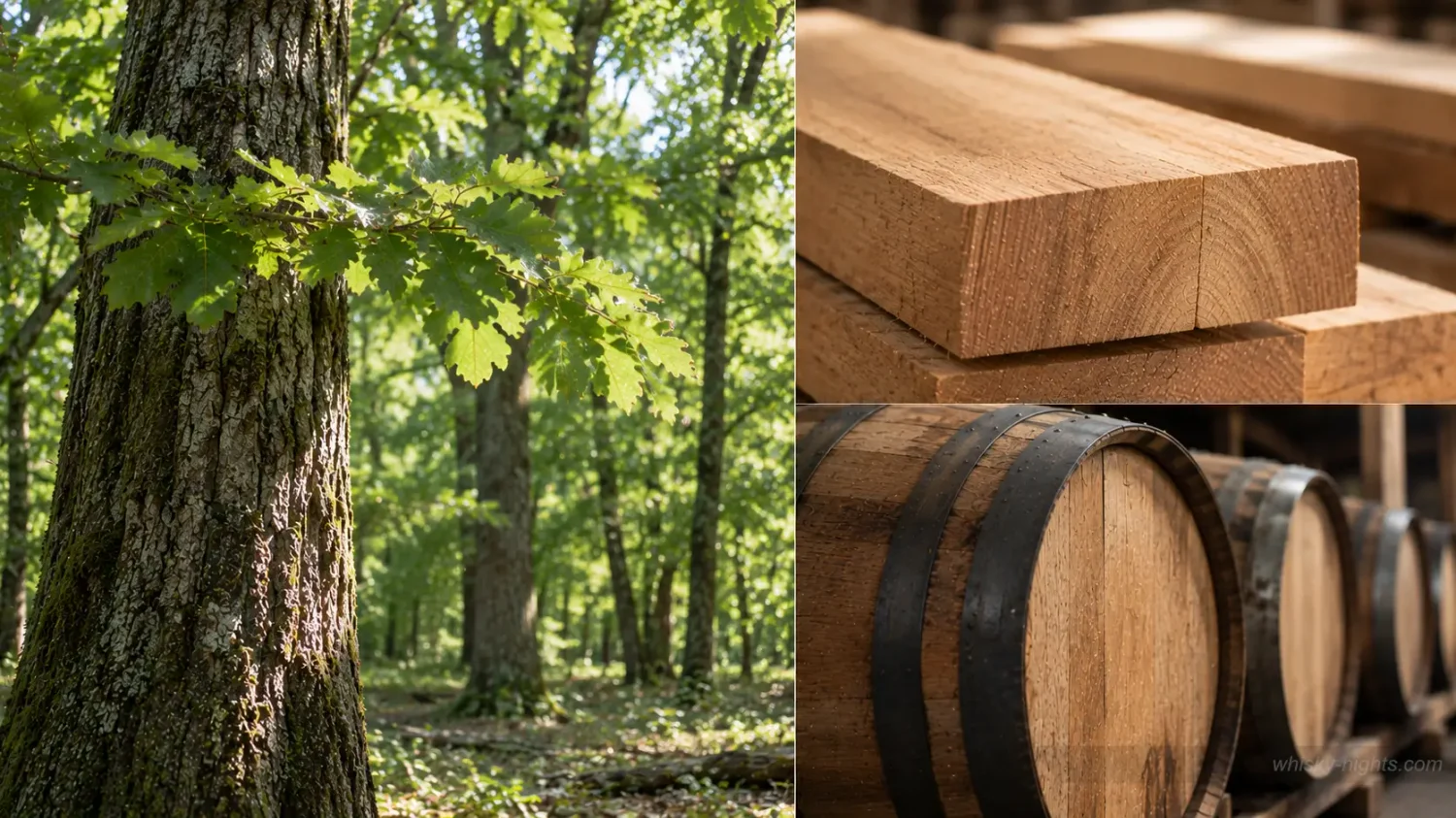
Mizunara is a type of Japanese oak that has become particularly associated with Japanese whisky. It is valued for the distinctive aromas it can contribute, often described in terms of sandalwood, incense and oriental spice.
Mizunara casks are challenging to produce. The wood can be difficult to work with, and its structure makes it more prone to leakage than some other types of oak. Suitable timber is also limited, making Mizunara casks relatively expensive.
The flavour influence of Mizunara is distinctive, but it is not always immediately obvious. The result depends on the spirit, the cask’s construction and condition, and the length and conditions of maturation. Mizunara is sometimes used alongside other cask types rather than as the sole influence on a whisky.
It is also important to distinguish the use of Mizunara from the legal definition of Japanese whisky. The Japan Spirits & Liqueurs Makers Association’s Japanese Whisky Labelling Standards set requirements relating to production, maturation, bottling and labelling for products presented as Japanese whisky under those standards. They do not mean that every Japanese whisky must be matured in Mizunara casks.
Japanese whisky producers use a range of casks, including American oak and sherry-seasoned casks, as well as Mizunara. Each offers a different route to developing the character of the spirit.
Mizunara is therefore best understood as a distinctive and often costly maturation option, rather than a requirement or a guarantee of a particular flavour. Its appeal lies in the character it can bring when used thoughtfully as part of a wider maturation strategy.
9. Cask Finishing, Double Maturation and Marrying
Whisky maturation does not always involve leaving a spirit in one type of cask from beginning to end. Producers may transfer whisky between casks or combine whiskies matured in different ways to shape the final flavour profile. Three terms often encountered in this context are cask finishing, double maturation and marrying.
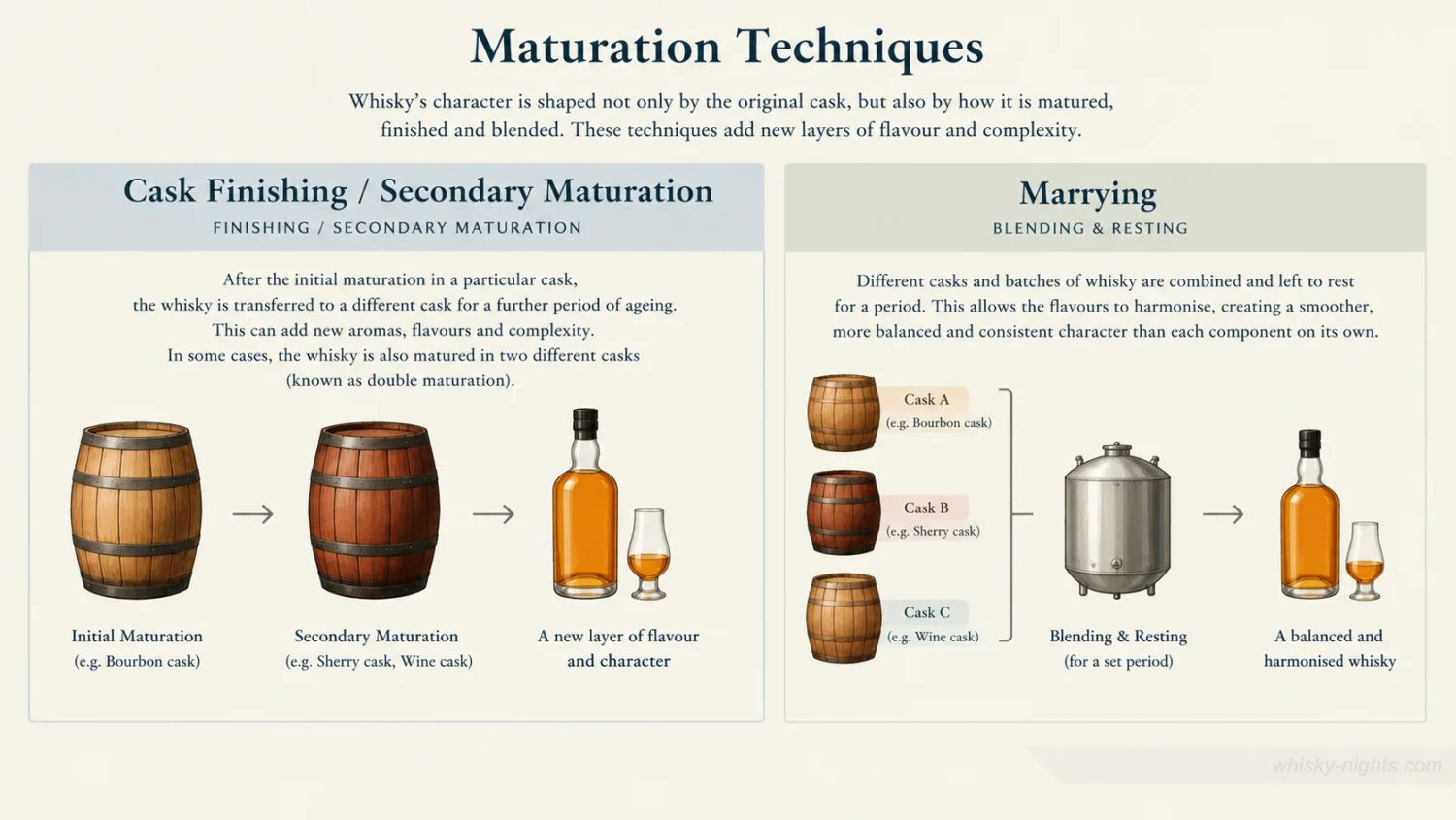
Cask Finishing
Cask finishing involves transferring whisky that has already undergone a period of maturation into another cask for a further period. The finishing cask is selected to add or emphasise particular characteristics.
For example, a whisky initially matured in bourbon casks might be finished in a sherry, Port or wine cask to introduce additional fruit, sweetness or spice. The finishing period can vary, and the influence depends on the cask’s condition, previous use and the character of the whisky.
Finishing is intended to shape the existing spirit rather than erase its original character. A well-judged finish can add complexity while allowing the distillery’s underlying style to remain recognisable.
Double Maturation
Double maturation describes a process in which whisky matures in two different cask types or in two distinct cask environments. The term is sometimes used in a similar way to cask finishing, and usage can vary between producers.
In practice, the distinction is not always clear-cut. Some producers use double maturation to describe a substantial second period of maturation, rather than a shorter finishing stage. The product description and the producer’s explanation are therefore useful when trying to understand exactly how a whisky was made.
Marrying
Marrying refers to the process of allowing different casks or batches of whisky to rest together after they have been combined. This gives the components time to integrate and helps the final blend develop a more coherent character before bottling.
Marrying is not necessarily the same as cask finishing. It is concerned with bringing different components together, rather than simply adding the influence of a new cask type. Depending on the production method, the combined whisky may rest in a vat or in a cask before bottling.
These terms describe related but distinct parts of whisky production. Cask finishing focuses on the influence of a subsequent cask, double maturation refers to maturation in two stages or cask environments, and marrying allows different whisky components to integrate. The precise meaning can vary by producer, so it is worth checking the details behind a particular bottling.
10. Choosing Whisky by Cask Type
Cask type can be a useful starting point when choosing a whisky, particularly if you already know which flavours you enjoy. It is not a guarantee of the final flavour, but it can help narrow down the options.
If you enjoy vanilla, caramel and gentle sweetness, bourbon-cask-matured whisky is a good place to start. American white oak commonly contributes these characteristics, often alongside coconut, soft spice or fresh oak notes.
If you prefer richer flavours of dried fruit, nuts and spice, look for whisky matured in sherry-seasoned casks. Oloroso casks are often associated with nutty and dried-fruit notes, while PX casks tend to be linked with more concentrated dark-fruit sweetness.
For a fruit-led profile, consider whiskies matured or finished in wine casks. Port, Madeira and other wine casks can bring additional layers of fruit and sweetness, though the result depends on the individual cask and the spirit.
If you are interested in more distinctive aromas, Mizunara-matured whisky may be worth exploring. It can contribute notes associated with sandalwood, incense and spice, although its influence varies from one whisky to another.
It is also useful to consider whether the whisky is matured in first-fill or refill casks. First-fill casks generally make a more pronounced contribution from the wood and previous contents, while refill casks tend to allow more of the distillery’s spirit character to come through.
Finally, remember that cask type is only one factor. The distillery’s style, the age of the whisky, the strength at bottling and the overall maturation process all influence the result. A whisky described as sherry-cask-matured, for example, can be dry and restrained or rich and sweet, depending on how it was produced.
The best way to use cask information is as a guide rather than a strict rule. Once you find a cask style you enjoy, compare different distilleries and maturation approaches to discover how each producer interprets it.
Conclusion
Cask maturation is one of the key factors shaping a whisky’s aroma, flavour and texture. The type of oak, the cask’s previous contents, its size and its history all contribute to the result, alongside the spirit itself and the conditions in which it matures.
Bourbon, sherry, wine and other casks each offer different possibilities, while first-fill and refill casks can influence how prominently those characteristics appear. Techniques such as cask finishing, double maturation and marrying give producers further ways to refine the final whisky.
Understanding these differences makes it easier to interpret a whisky’s description and choose a bottle that suits your preferences. But cask type is only part of the story: the most rewarding discoveries often come from comparing how different distilleries use similar casks to create their own distinctive styles.
Further Reading
Here are more articles from the same category.
About Whisky Nights
Whisky Nights is a Japan-based online liquor store and whisky publication offering clear, reliable information and carefully selected bottles for international customers worldwide.
Learn more about us